
What You Actually Need to Know
If you’re caring for someone at home in their final stages of life, the most important things are comfort, safety, and ease of care.
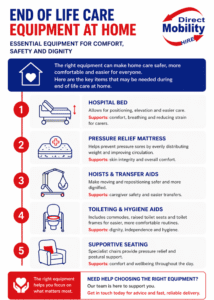
In most cases, families will need:
- A hospital bed for positioning and comfort
- A pressure-relieving mattress to prevent sores
- Toileting aids such as a commode
- Transfer support like a hoist
If care is becoming physically difficult or your loved one is spending more time in bed, it’s usually the right time to arrange support.
Start here: Explore Hospital Bed Hire to ensure comfort from the outset.
End of Life Care vs Palliative Care
While the terms are often used interchangeably, they serve slightly different purposes.
| Palliative Care | End of Life Care |
| Focuses on improving quality of life at any stage of illness | Focuses on the final months or weeks |
| Can be given alongside treatment | Usually begins when treatment is no longer the priority |
| Can continue for a long period | Typically shorter-term and more intensive |
For families planning care at home, understanding this difference helps set expectations around the level of support required.

What to Expect with End-of-Life Care at Home
Caring for someone at home often becomes more hands-on over time. As mobility decreases, the focus naturally shifts toward comfort and reducing strain, both for the individual and for those providing care.
You may notice that your loved one begins to spend more time in bed, requires assistance with movement, and becomes more sensitive to pressure or discomfort. Small adjustments in the environment can have a significant impact, which is why introducing the right equipment early can make the process far more manageable.
What Equipment Is Needed for End-of-Life Care?
Hospital Beds
A hospital bed is often the foundation of home care. It allows for repositioning, elevation, and easier day-to-day care.
This isn’t just about convenience, it helps prevent discomfort, supports breathing, and makes it safer for caregivers to assist.
To see hospital beds and sleeping equipment to hire you can check out our products.
Pressure Relief Mattresses
When someone is less mobile, pressure can build up quickly in certain areas of the body.
A pressure-relieving mattress helps distribute weight more evenly, reducing the risk of sores and improving overall comfort. This becomes increasingly important the more time is spent in bed.
Hoists and Transfer Support
As mobility reduces, moving safely becomes more difficult.
Hoists and transfer aids reduce physical strain and allow movement to happen in a more controlled, dignified way.
If lifting or repositioning is becoming difficult, it’s worth exploring – Hoist Hire & Moving and Handling Options
Toileting and Hygiene Support
Maintaining dignity and comfort is essential.
In many cases, this involves introducing simple but effective solutions such as:
- Bedside commodes for easier access
- Raised toilet seats to reduce strain
- Toilet frames for additional stability
These adjustments can significantly reduce discomfort and make daily care more manageable.
Seating and Daytime Comfort
Even short periods out of bed can improve mood and wellbeing.
Supportive seating designed for pressure relief and posture can help make this possible, allowing your loved one to remain engaged and comfortable throughout the day.
See our full range of seating options.
Hiring vs Buying: What’s the Right Approach?
For most families, hiring equipment is the most practical option.
Needs can change quickly, and purchasing everything outright can be both expensive and limiting. Hiring allows you to adapt as required, ensuring that the support always matches the situation.
You can read more on Mobility Equipment Hire to find flexible options based on your needs.
When Should You Put This in Place?
One of the most common challenges is knowing when to act.
If care is becoming physically demanding, or comfort is starting to decline, it’s usually better to introduce equipment sooner rather than later. Waiting often leads to unnecessary strain, both physically and emotionally.
Putting the right equipment in place early can help prevent avoidable discomfort, reduce the risk of injury, and make day-to-day care more manageable for everyone involved.
If you’re unsure what is needed or when to act, it’s always better to have a conversation and plan ahead rather than wait until things become more urgent.
Contact us today to discuss your situation and get the right support in place.
FAQs
What equipment is needed for end of life care?
Most end of life care at home involves a combination of equipment designed to improve comfort, safety and ease of care. This typically includes a hospital bed to support positioning, a pressure-relieving mattress to reduce the risk of sores, toileting aids such as a commode or raised toilet seat, and transfer support like a hoist to assist with movement. The exact setup will depend on the individual’s mobility, condition and level of care required, but introducing the right equipment early can make daily care more manageable and significantly improve overall comfort.
Can equipment be arranged quickly?
In many cases, mobility equipment can be arranged within a short timeframe, with delivery and setup depending on availability and location. Planning ahead helps ensure everything is in place when needed.