Knee Scooters Explained: When to Use One and How to Hire Safely
Knee scooters are wheeled mobility aids for people who cannot bear weight on one lower leg. They are typically more stable and less tiring than crutches, making them an excellent choice for foot or ankle surgery, fractures, or Achilles injuries. They are not suitable for everyone, balance, home environment, and knee health all matter. Seeking advice from a healthcare professional or an occupational therapist can help ensure the equipment matches your specific needs and home environment.
What Is a Knee Scooter?
Injuries to the foot, ankle, or lower leg can seriously disrupt everyday life. Simple tasks like walking to the shops, driving, or moving around the house suddenly become a real challenge, and traditional crutches aren’t always the most comfortable or practical solution.
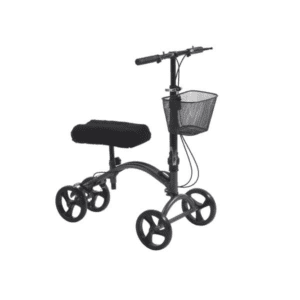
A knee scooter (also known as a knee walker) is a wheeled mobility device designed for people who cannot put weight on one lower leg. Instead of hopping on crutches, the user rests their injured leg on a padded knee platform while propelling themselves forward with their unaffected leg. Most models feature adjustable handlebars for steering, hand-operated brakes for control, and four wheels for added stability.
Knee scooters are commonly recommended across the UK following foot and ankle injuries or surgery, and can be used both indoors and outdoors depending on the model chosen.
When Should You Use a Knee Scooter?
Knee scooters are most appropriate when you need non-weight bearing mobility and want to prioritise stability, comfort, and independence throughout your recovery. They are frequently used following a wide range of conditions and procedures, including broken ankles and foot fractures, Achilles tendon ruptures and repairs, severe ligament sprains, bunion correction surgery, reconstructive ankle procedures, post-operative foot surgery, diabetic foot complications requiring offloading, and lower leg stress fractures.
For many people, knee scooters are significantly less physically demanding than crutches, particularly during longer recovery periods. Crutches can cause shoulder, wrist, and hand strain, which is especially problematic for older adults or those with upper body weakness. A knee scooter provides a more ergonomic option that reduces fatigue and the risk of secondary injury from overexertion.
If you need to travel longer distances, return to work, or manage everyday errands during recovery, a knee scooter can be a practical, independence-preserving solution.
Knee Scooters vs Crutches: Which Is Better?
There is no one-size-fits-all answer. The best option depends on your injury, home environment, and physical capability. The table below highlights the key differences to help you make an informed decision.
| Feature | Knee Scooter | Crutches |
| Stability | Four wheels, strong balance on flat surfaces | Requires upper body strength and coordination |
| Fatigue | Less strain on shoulders, wrists, and arms | Can cause significant arm, wrist, and shoulder fatigue |
| Speed | Faster and easier for longer distances | Slower and more physically demanding |
| Stairs | Not suitable | Can be used on stairs with care |
| Portability | Bulkier, though foldable models are available | Lightweight and easy to carry |
| Learning Curve | Quick to adapt to | Requires practice and good balance |
As a general rule, crutches may be the better option if you need to navigate stairs regularly or have very limited space at home. A knee scooter tends to be preferable for those who want greater comfort and stability on flat surfaces over an extended recovery period. Always consult a healthcare professional before making your decision.
Safe Use Tips at Home and Outdoors
A few straightforward habits can make a significant difference to your safety during recovery.
- Remove loose rugs and clear any obstacles indoors that could catch the wheels or cause the scooter to tip.
- Always apply the brake when stationary to prevent rolling.
- Avoid wet surfaces, steep inclines, and heavily uneven pavements outdoors where possible.
- Take your time when turning or manoeuvring in tight spaces, the scooter is stable, but sudden movements can unsettle it.
How Long Will You Need a Knee Scooter?
The duration of hire typically mirrors your non-weight bearing period, which your consultant or physiotherapist will advise on. As a rough guide, minor fractures may require around two to four weeks, surgical recoveries typically range from four to eight weeks, and more complex reconstructions can extend beyond eight weeks.
Knee scooter hire is usually arranged in weekly blocks and can be extended as your recovery progresses. It is always worth confirming your expected timeline with your medical team before hiring, so you can plan accordingly and avoid any gaps in mobility support. If you are unsure about how long you may need the equipment or which model would best suit your home environment, our team is always happy to offer guidance and help you make an informed decision before committing.
If you are unsure whether hiring or purchasing is the right choice, you can learn more about why hiring mobility equipment is often the most practical solution during temporary recovery.
Types of Knee Scooters Available
When hiring a knee scooter, you will typically encounter three main categories. Standard indoor models are compact and lightweight, designed for smooth, flat surfaces such as home or office environments. All-terrain scooters feature larger wheels and reinforced frames, making them suitable for outdoor pavements and uneven ground. Foldable models are designed with portability in mind and are ideal if you need to transport the scooter in a car or store it in a small space.
The right choice depends on your lifestyle, home environment, and the nature of your recovery.
What Knee Scooters Are Not
It is important to understand the limitations of knee scooters before hiring. They are not a substitute for full rehabilitation, and should not be used as a permanent mobility solution. They are not designed for navigating stairs, and standard models are not suited to rough or heavily uneven terrain. They are a temporary recovery aid, an important one, but one that works best alongside proper medical care and physiotherapy guidance.
Who Should Not Use a Knee Scooter?
Knee scooters are not suitable for everyone. They may not be appropriate if you have a knee injury on the affected leg, experience significant balance issues or severe vertigo, need to navigate stairs frequently, have upper body coordination difficulties that affect steering, or have limited space at home that makes manoeuvring difficult. Medical advice should always be sought before hiring to ensure a knee scooter is the right choice for your specific situation.
How to Hire a Knee Scooter Safely
Hiring is often more cost-effective than purchasing for short-term recovery, but safety and quality must always come first. Here is what to look out for.
- Choose a reputable provider. Look for mobility specialists with clear hire terms, transparent pricing, and strong customer reviews that specifically mention reliability and the condition of equipment.
- Ensure proper fit. The knee platform and handlebars should be height-adjustable and set up to maintain good posture. Poor positioning can lead to discomfort, fatigue, or instability, all of which increase the risk of falls.
- Check safety features. Before accepting the scooter, confirm that the brakes are responsive, the wheels roll smoothly, and the frame feels sturdy. This is especially important if you plan to use it outdoors.
- Ask for usage guidance. Understand how to brake, turn safely, and manage slight inclines before setting off. Most accidents happen due to overconfidence or unfamiliarity in the first few days of use.
- Confirm cleaning and maintenance standards. Equipment should be thoroughly sanitised and mechanically inspected between hires, both for hygiene and to ensure mechanical reliability.
Final Thoughts
Recovering from a foot or ankle injury is challenging enough without your mobility aid making things harder. A knee scooter, when chosen carefully and used correctly, can significantly improve your comfort, independence, and overall recovery experience, offering a more stable and less physically demanding alternative to crutches, particularly during longer periods of non-weight bearing.
The key is matching the right model to your lifestyle, ensuring the scooter is properly fitted, and hiring from a trusted provider who prioritises safety and hygiene. Take time to assess your home environment, speak with your healthcare professional, and do not hesitate to ask your hire provider questions before committing.
A well-chosen knee scooter will not speed up your healing, but it can make the time between injury and recovery feel a great deal more manageable. If you’re considering hiring a knee scooter or would like advice on whether it’s the right option for your recovery, our team is here to help. Get in touch for friendly, practical guidance and we’ll make sure you have the right support in place to stay safe, comfortable, and mobile throughout your recovery.
FAQ
Are knee scooters a good idea?
For most people recovering from foot or ankle injuries, yes. They reduce upper body strain, improve stability, and make longer periods of non-weight bearing far more manageable. That said, suitability depends on your balance, living environment, and specific injury, so always check with a healthcare professional first.
Is it better to use crutches or a knee scooter?
It depends on your situation. Crutches are more practical if you need to navigate stairs regularly or have very limited space. A knee scooter tends to be the better option for comfort and stability on flat surfaces, especially over longer recovery periods. Your medical team can help you decide what is most appropriate.
How long will I need to hire a knee scooter?
Typically for the duration of your non-weight bearing period. Minor fractures may require just two to four weeks, while surgical recoveries often range from four to eight weeks. More complex procedures can extend beyond that. Your consultant or physiotherapist will advise on the expected timeframe.
Can I use a knee scooter outdoors?
Standard models are designed for flat, smooth surfaces. If you need to use your scooter outdoors regularly, an all-terrain model with larger wheels and a reinforced frame is a better choice. Avoid wet surfaces, steep slopes, and heavily uneven ground regardless of the model.
What should I check before hiring a knee scooter?
Make sure the provider is reputable, the equipment has been cleaned and maintained, the brakes are responsive, and the scooter can be adjusted to suit your height. Ask for a usage demonstration before you leave, particularly if it is your first time using one.